The Neighborhood
Kenilworth
Asheville's pioneer suburb — founded in 1913, a town of its own until 1929, and still one of the quietest places in the city to live a mile from everything.
Where It Sits
Between a mountain and a river, minutes from downtown.
Kenilworth occupies the high ground southeast of downtown Asheville, tucked between Beaucatcher Mountain and the Swannanoa River, bounded roughly by Tunnel Road to the east and Biltmore Avenue to the west.
That geography is the whole story. The hills kept it separate enough to feel rural, while the short run down Biltmore Avenue put the center of Asheville within a few minutes. A century later that trade-off still holds.
- Founded1913
- Annexed by Asheville1929
- Neighborhood ParksFive
- To DowntownAbout a mile
A Short History
It was a town before it was a neighborhood.
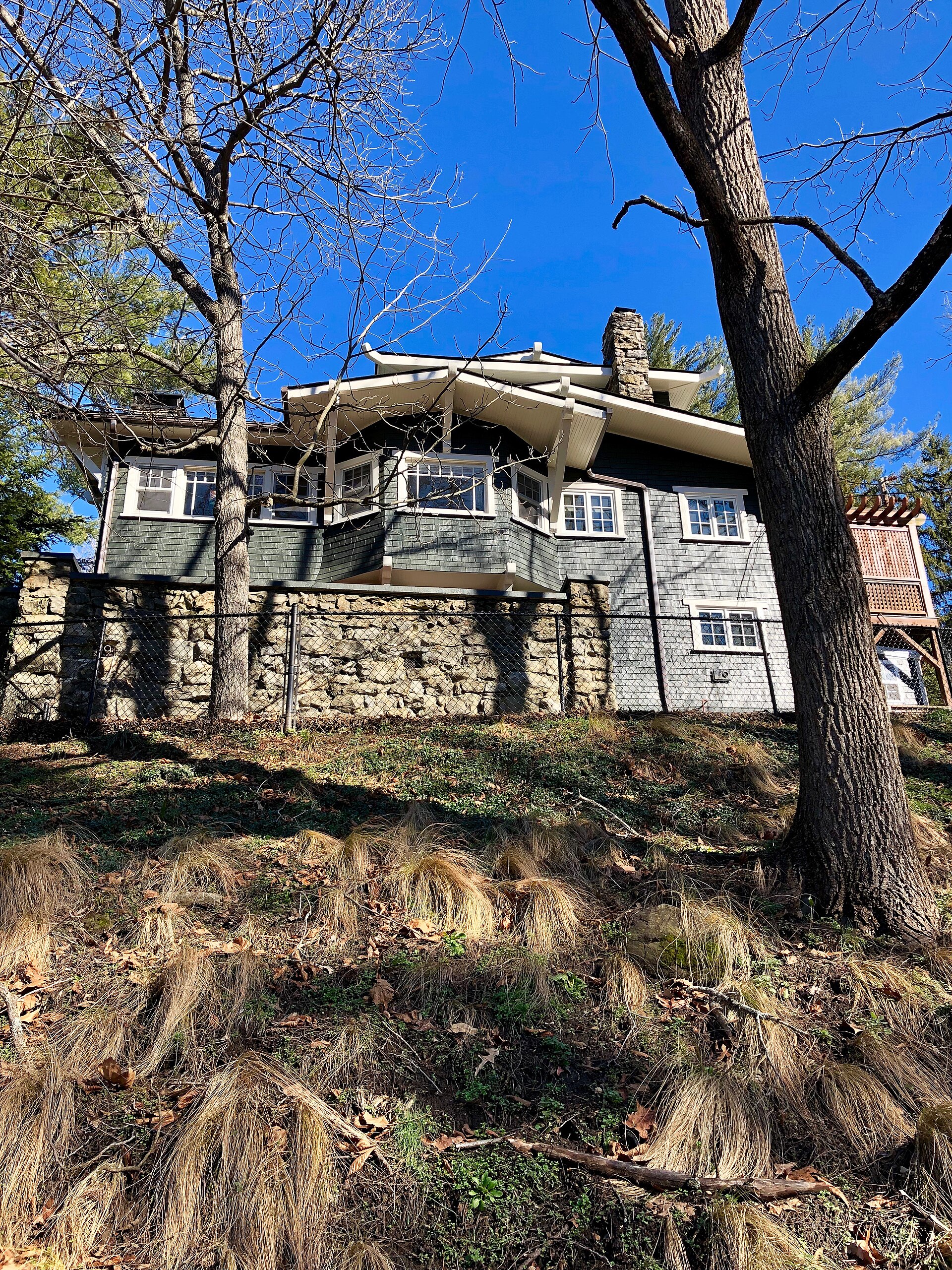
Bowling Park Road, Kenilworth · Warren LeMay, CC0
Build the roads where the horse hoofs are.
A group of developers incorporated the Town of Kenilworth in 1913, on high land above the Swannanoa River. Most of its growth came through the 1920s.
One of the founders, Jake Chiles, settled the question of street layout by letting his horse decide — the roads were cut where the animal found the easiest path up the hills. "Build the roads where the horse hoofs are," he said. It explains why Kenilworth's streets still wind the way they do, and why almost nothing here runs on a grid.
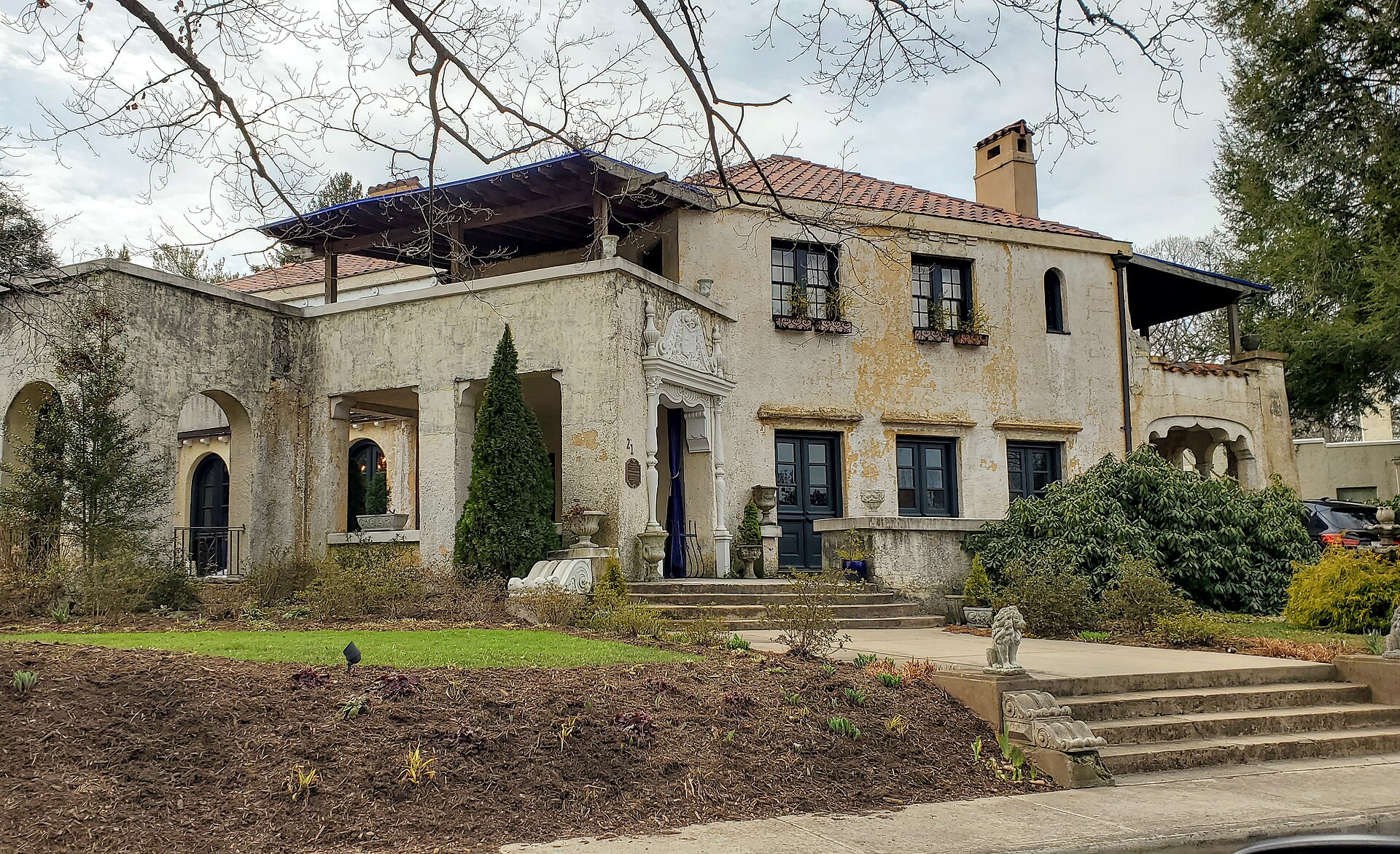
The Chiles House, Chiles Avenue · Upstateherd, CC BY-SA 4.0
North Carolina's first woman mayor.
Leah Chiles took over as mayor of Kenilworth after her husband Jake's death in 1925 and was elected in her own right in 1928 — the first woman to serve as mayor anywhere in North Carolina, and reportedly the first person to hold the office full-time.
She was not easily told no. Informed that women could not drive ambulances because they couldn't handle the conditions, she took a train to New York City, bought an Oldsmobile, and drove it home to Asheville over six days — alone, carrying her own fuel, through mudslides and mountain roads.
When the crash of 1929 pushed Asheville to annex its smaller neighbors, Kenilworth's residents voted to join the city by a single vote. Mayor Chiles filed a document declaring the independent town "condemned to die on June 30, 1929, to the bigger, better, and wealthier City of Asheville."
The Housing Stock
A hundred years of architecture on one hillside.
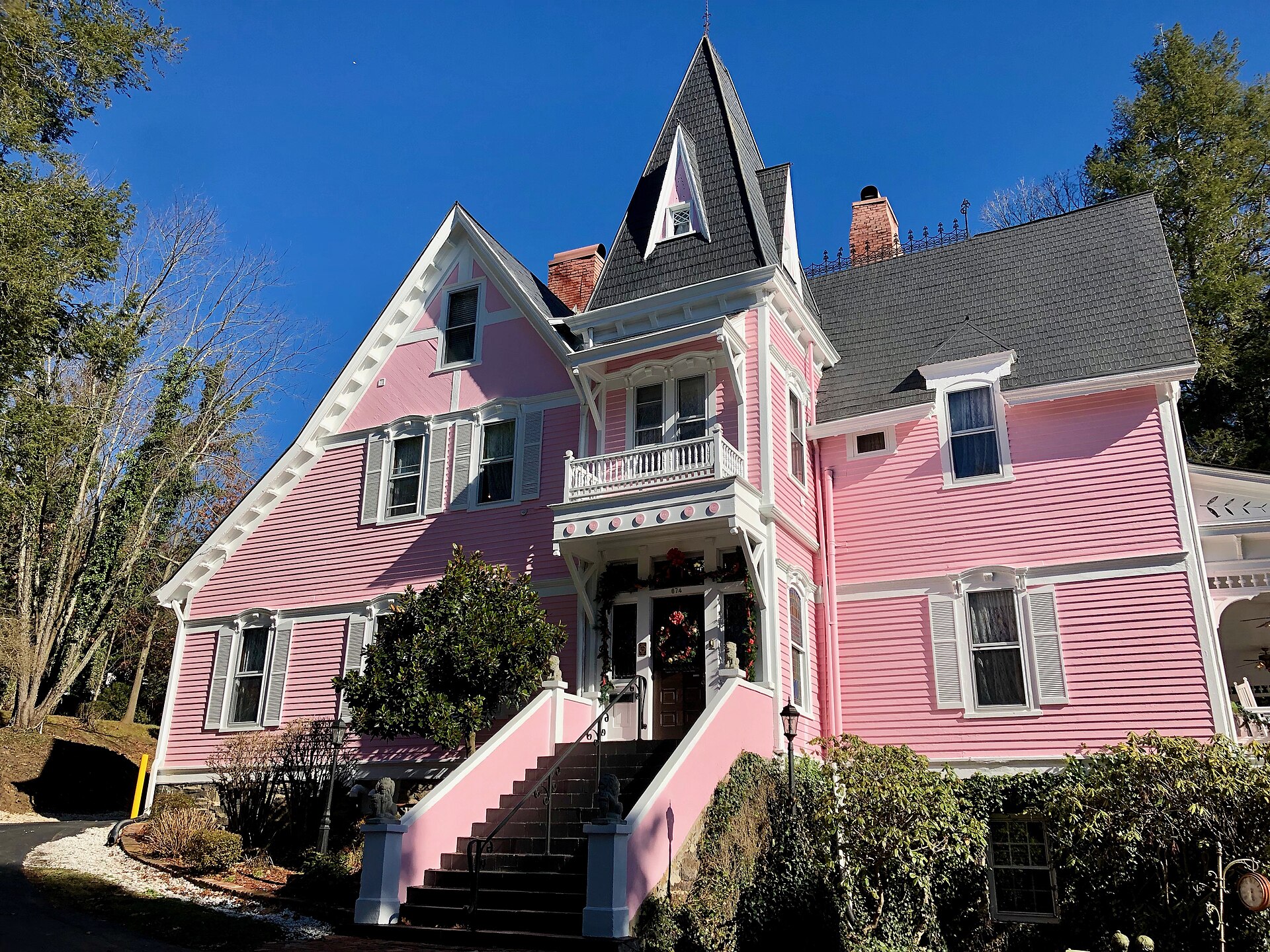
Swannanoa Hill Mansion — Gothic Revival, and unmistakably itself.
Warren LeMay, CC0
Because Kenilworth filled in over decades rather than all at once, no single style dominates. Blocks mix freely, and the effect is a neighborhood that reads as grown rather than developed.
- 1920s
- Spanish Colonial and Mediterranean villas, Tudor Revival, Craftsman bungalows.
- 1940s
- Modest post-war bungalows and cottages.
- 1950s–60s
- Mid-century ranches and split-levels on the hillsides.
- Today
- Careful modern infill and renovation among the older stock.
What ties it together is landscape rather than style — large stately trees, deep front plantings, and streets that bend with the terrain instead of cutting through it.
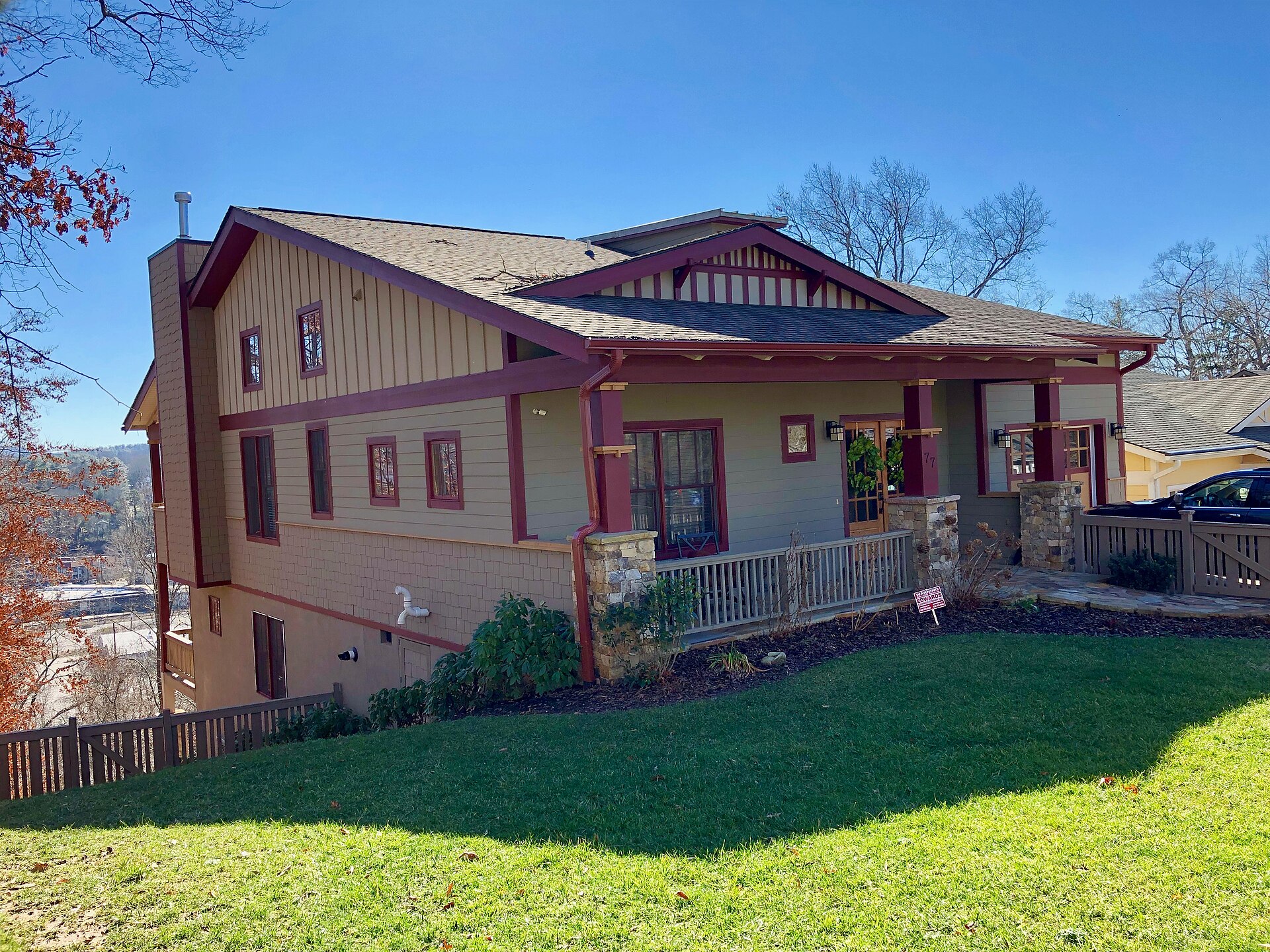
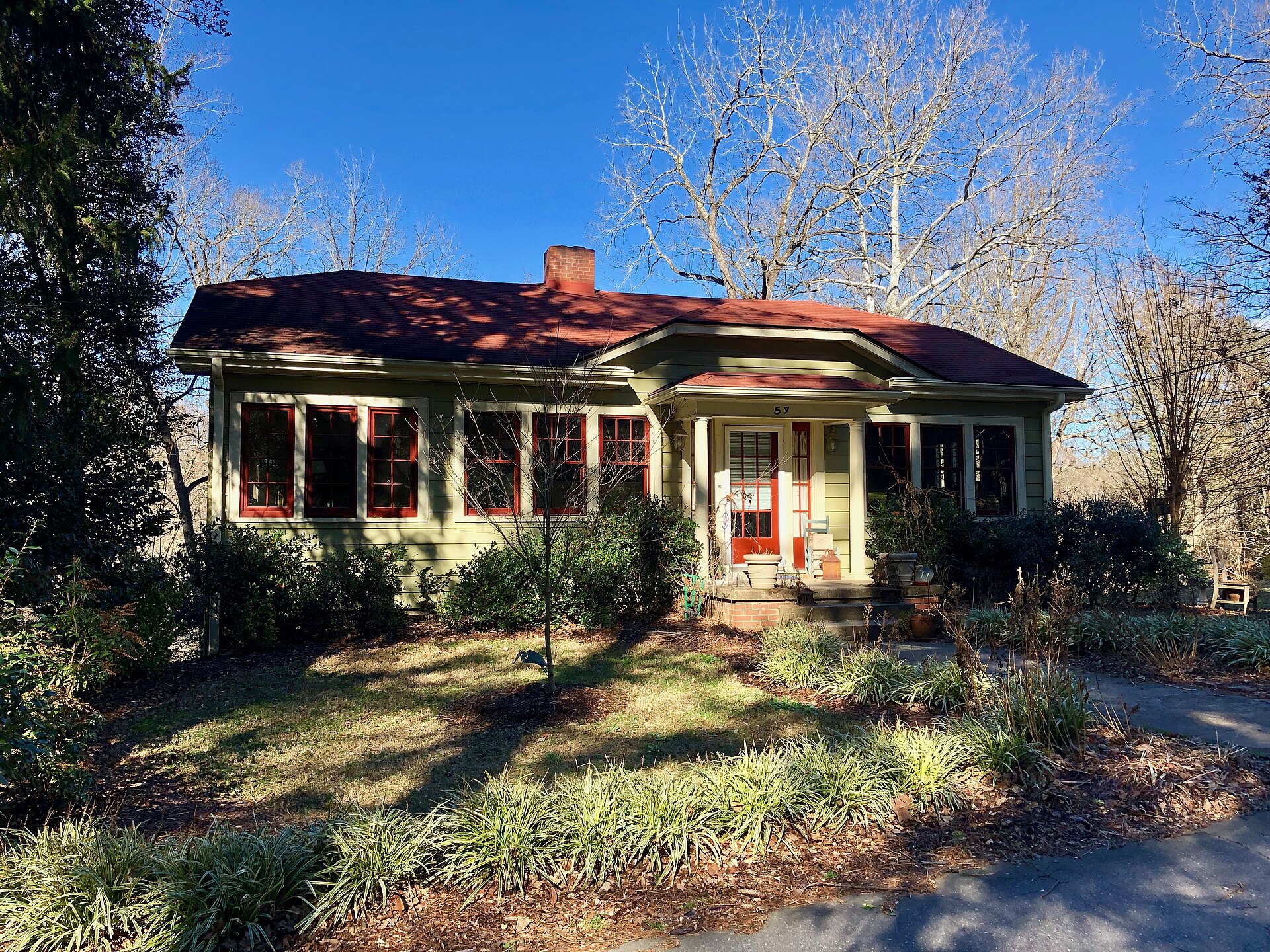
Neighborhood photographs by Warren LeMay (CC0) and Upstateherd (CC BY-SA 4.0)
Green Space
Five parks inside one neighborhood.
Unusual for a neighborhood this size, and a large part of why it feels the way it does.
-
Kenilworth Park
Playground and ball courts — the neighborhood's main gathering ground.
-
Leah Chiles Park
Playground and courts, named for the mayor who ran the town.
-
Seven Springs Park
Walking trails and natural area off Caledonia Road.
-
Meadow Park
Open green space and trails.
-
Forest Park
Wooded trails and quiet.
-
Swannanoa River Greenway
Nearby — a 7.5-mile greenway running toward the River Arts District.
Landmarks
Two places worth knowing about.
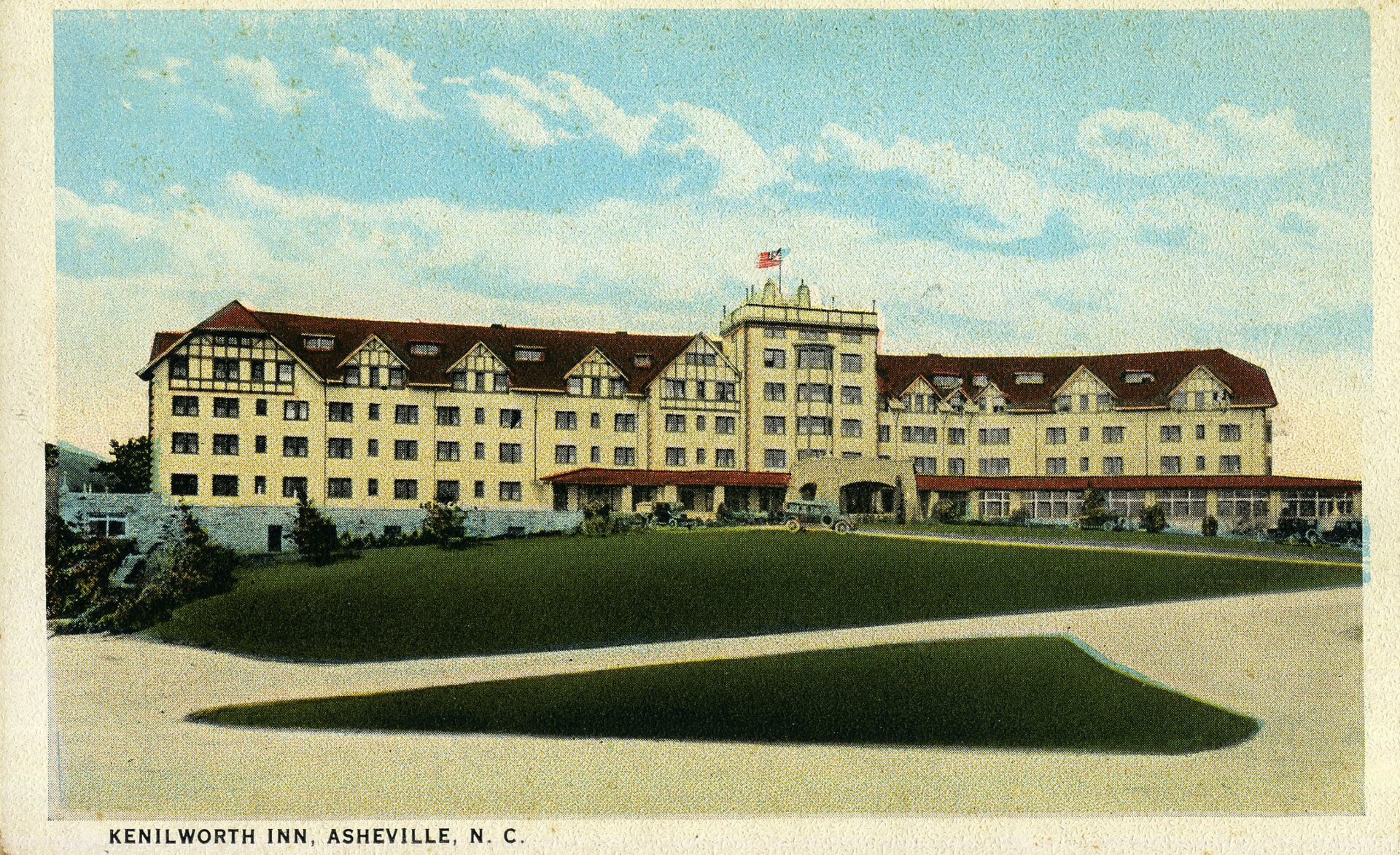
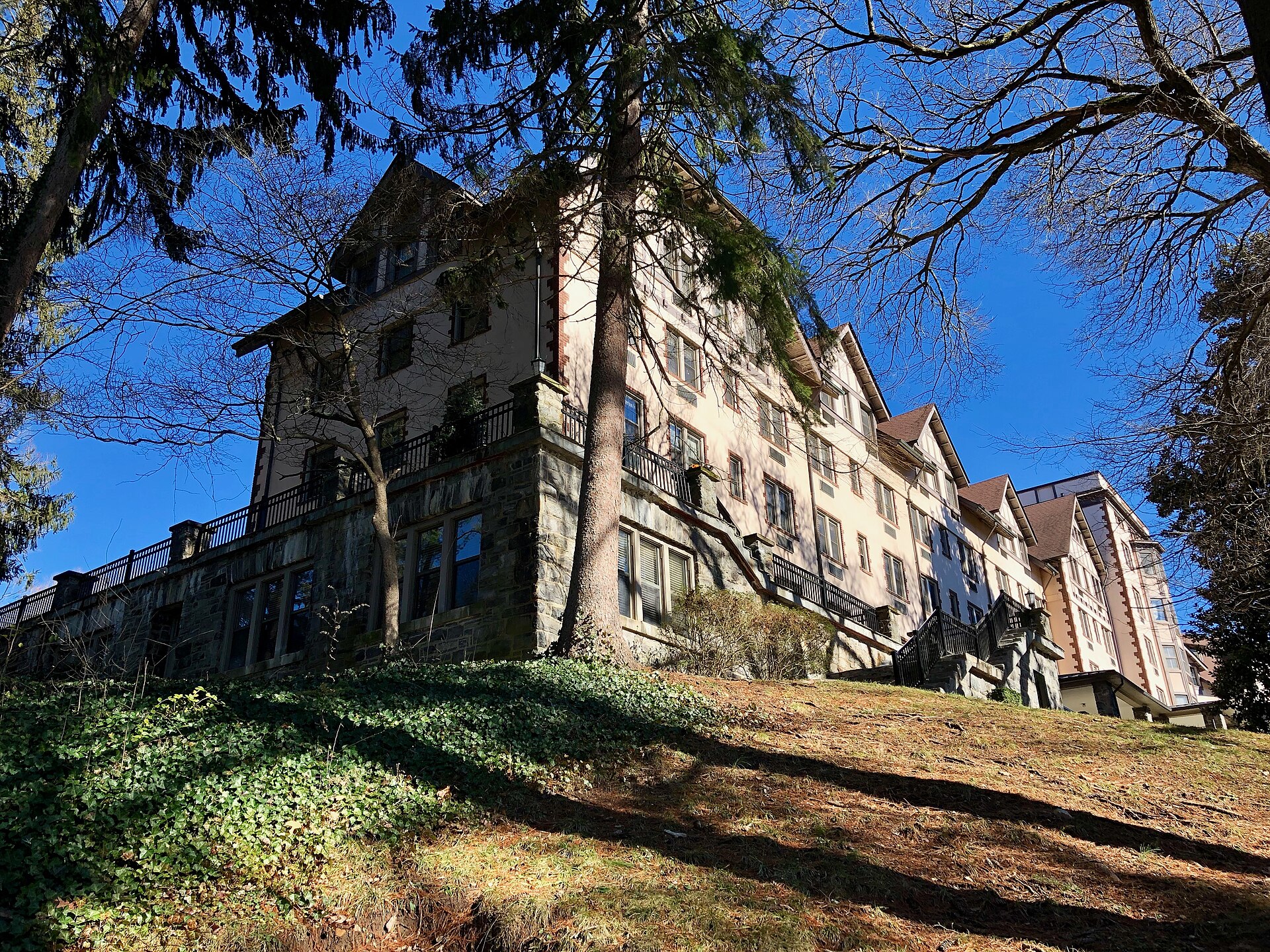
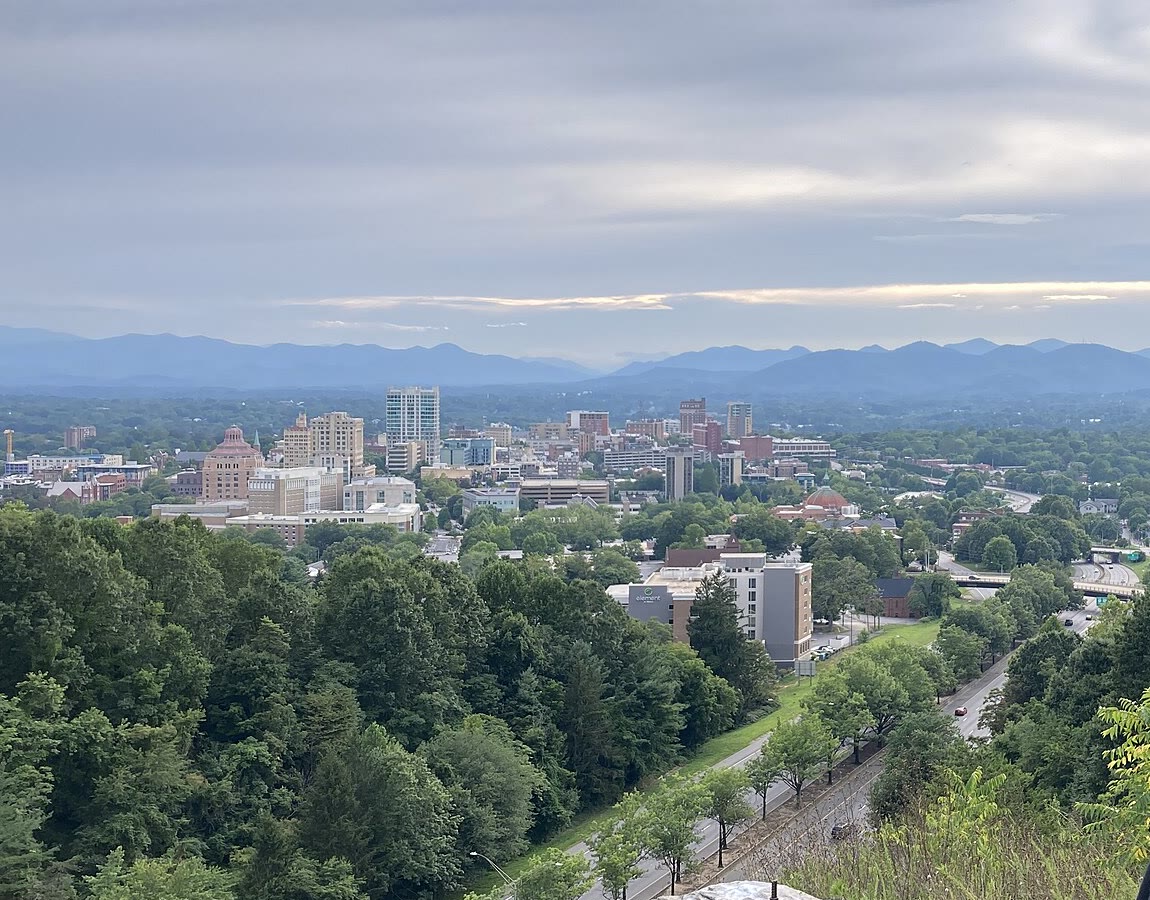
From Beaucatcher Mountain · Bill McMannis, CC BY 2.0
The Kenilworth Inn.
The original inn was built in 1890 by Joseph M. Gazzam, a Pennsylvania senator who had moved to Asheville the year before. It burned to the ground on an April night in 1909 — all seventy-five guests escaped.
James Madison Chiles rebuilt it as something meant to rival the Grove Park Inn. It was pressed into service as a military hospital almost as soon as it was finished, and over the following decades served as a psychiatric hospital, a hotel and more. Since 2000 it has been apartments — still standing, still the largest building in the neighborhood.
Getting Around
Sidewalks, trees, and a short walk north.
Kenilworth's streets are sidewalked and tree-lined, and the neighborhood connects north along Biltmore Avenue toward central Asheville. Most people drive the mile downtown, but you don't have to.
The neighborhood is organised through the Kenilworth Residents Association, which runs workdays, community programs and social events — the kind of thing that tends to survive only where people stay put for a while.
- Downtown Asheville≈ 0.9 mi
- Mission Hospital≈ 0.9 mi
- Biltmore Village≈ 1.4 mi
- Asheville Mall≈ 0.8 mi
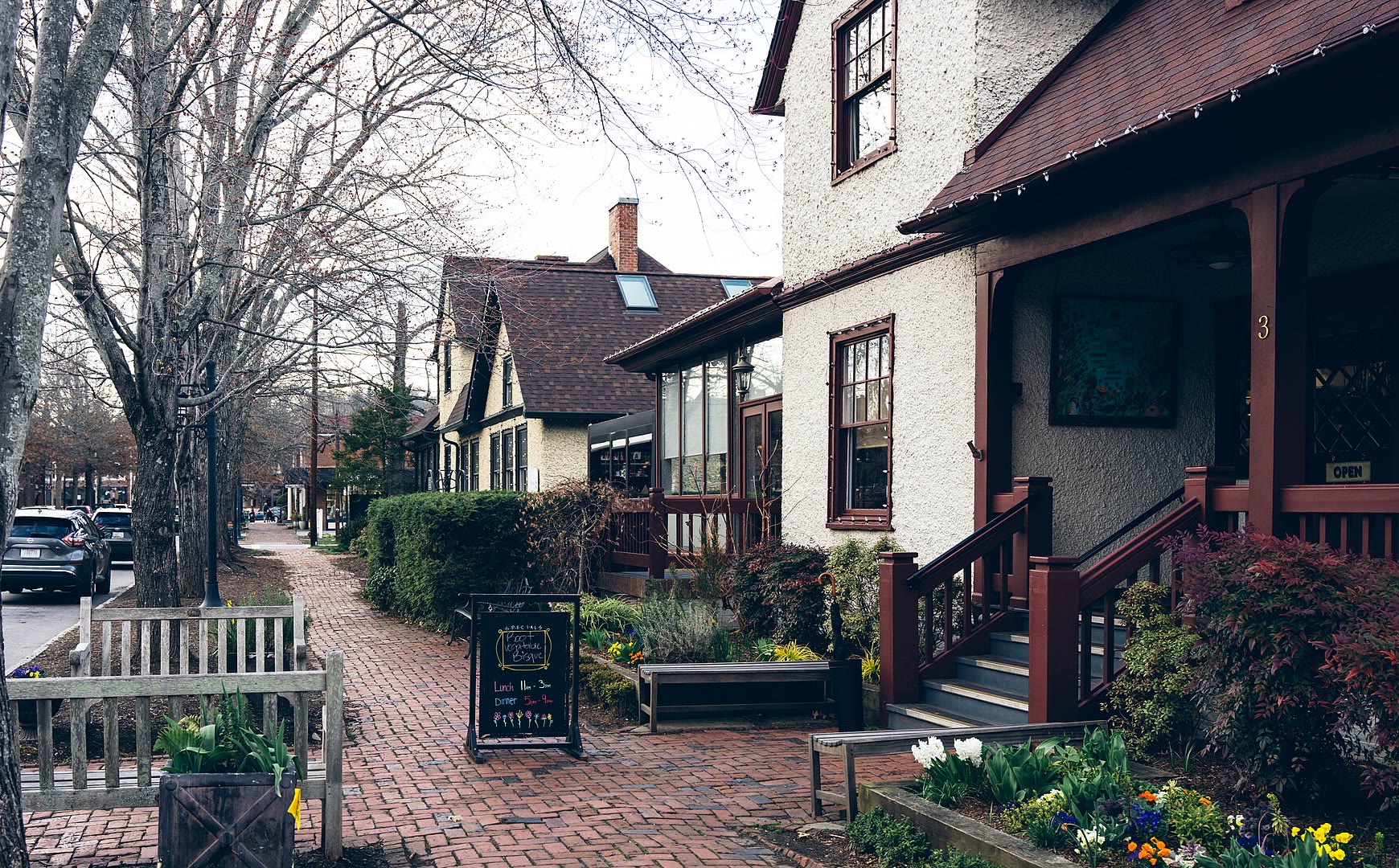
Biltmore Village · Sergiy Galyonkin, CC BY-SA 2.0
The Listing
23 Clearbrook Road is for sale in Kenilworth.
Four bedrooms, three baths, half an acre at the base of Beaucatcher Mountain — with a lower level ready to become a mother-in-law suite and a shovel-ready ADU site out back.